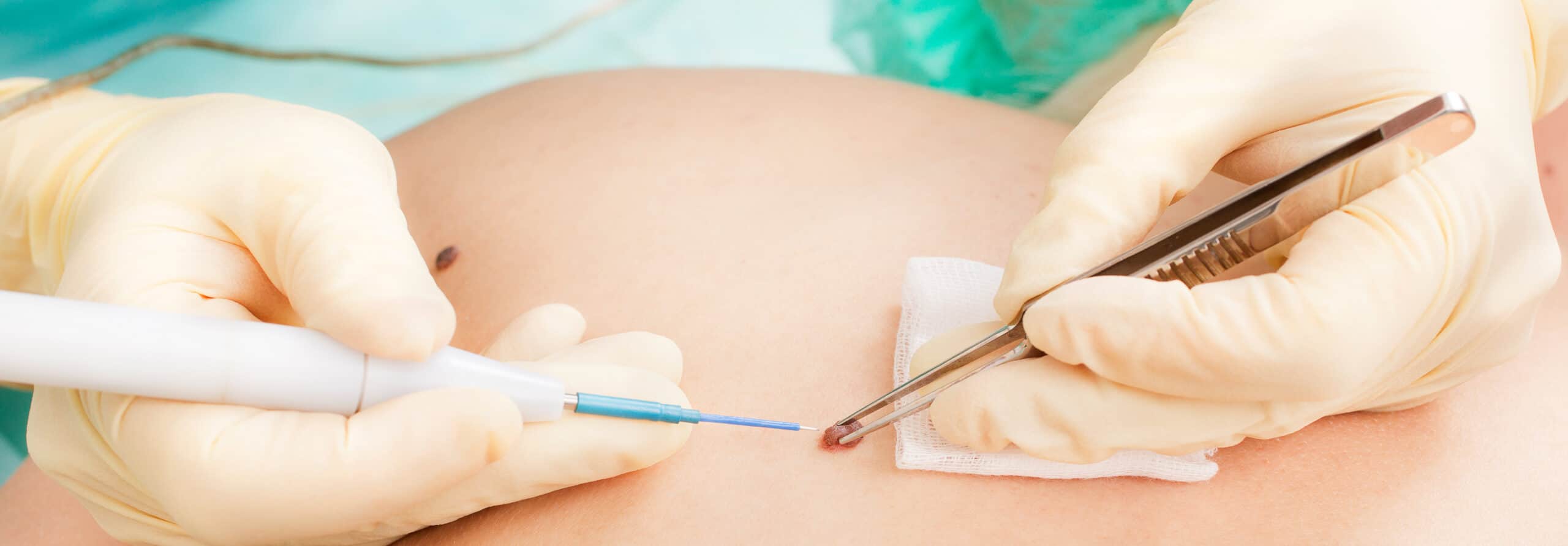
Skin lesions are any abnormal growth that appears on the surface of the skin, and include large moles, skin tags, fat lumps, cysts, warts, or ulcers that don’t heal. Some of these lesions are benign (non-cancerous), while some require a histological evaluation to rule out cancerous metastasis. At the Horizon Medical Care Center in Ibri, We provide a safe and accurate dermal lesion removal service, whether for medical or cosmetic reasons, using the latest surgical and cosmetic techniques to reduce scarring and achieve the best results.
Types of skin lesions we remove:
Large or irregular moles
Large or irritated skin tags
Fatty lumps (lipomas)
Skin cysts (cysts)
Treatment-resistant warts
Benign or suspicious skin tumors
Methods of Dermatological Lesion Removal at the Horizons Center
We determine the method of removal based on the size and location of the lesion:
Minimally invasive resection: It is done under local anesthesia using precise instruments, and the wound is closed with cosmetic sutures.
Cauterization or laser: for superficial and small lesions such as appendages or some warts.
Partial or complete resection with histological examination: If a cancerous metastasis is suspected, the sample is sent to a laboratory for analysis.
Cosmetic resection: For visible areas such as the face, using fine cosmetic stitching to reduce scarring.
Steps to Procedure at the Horizon Center
Clinical evaluation: Examining the skin lesion and determining its severity and the best way to remove it.
Local anesthesia: To ensure the patient’s comfort during the procedure.
Lesion removal: In the appropriate way, whether by cutting, laser or cauterization.
Closing the wound (if applicable): using cosmetic sutures or medical patches.
Post-Procedure Care: Detailed patient instructions to prevent inflammation and speed up recovery.
Follow-up: especially if the sample is sent for laboratory testing.